
Taking control of your working life by career planning is a sensible thing to do, but is promotion the only option if you want to feel like you’re making progress?
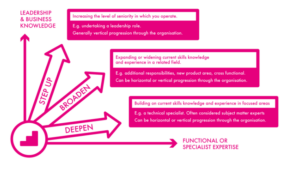
Put another way, does getting on always mean going up when it comes to your career? Not necessarily. If you want to do more, you have three main routes for career progression – step up, broaden, or deepen and a multitude of options within these.
You can plan to do all three at various points or combine them if that works. What matters is knowing both your next step, and your overall goal, so you can plan the right development steps to get you there. https://megburtoncoach.co.uk/career-coaching/
I first came across this model some time ago (I think it was attributed to Nestlé but I can’t find any source to credit). I found it useful for helping people explore what they wanted from their next career move and longer-term aspirations.
The case for career planning
As we get further into our careers, development opportunities can naturally narrow. That makes it even more important to take control of the direction your career is heading. And the fast pace of change in the world of work today means we all need to be much more agile and adaptable in our careers to keep up and stay relevant.
You might have heard of the term FOBO – fear of being obsolete – due to the speed of change, causing worry that your role may disappear or evolve in a way you’re not prepared for.
You need to both be actively scanning and looking ahead at what’s happening in your profession and industry, as well as planning to keep up with those changes. Successful career planning means you’re creating planned opportunities to learn, adapt and keep pace with change, as well as being open to respond to the changes you didn’t see coming to stay ahead and embrace AI rather than fear it.
In my case earlier in my career in learning and development, advances in technology saw the emergence of e-learning. I remember that many L&D professionals felt like it could become an existential threat, meaning companies and people wouldn’t do any of their learning or professional development in person and the profession would be doomed. What actually happened was a change to a blend of both e-learning and in-person. Even now with further tech advances and more online learning available at everyone’s fingertips, in person training is still highly valued because of the human element. I needed to both be aware of the threat and to make plans for my own development to mitigate its impact on me.
If the role you’re in, the sector, or your profession is changing and you’re not, the gap between your current skills and being competent will be growing. You might be exceptional at your role at a point in time, but being curious, keeping on top of development and engaging in lifelong learning is important for your future.
Stepping up – the path to promotion
If you’re thinking about your career development plan, promotion might be the first thing that comes to mind. Working your way up through the different layers of seniority could be the right thing for you, whether in one organisation or by moving between a few. Stepping up is about moving upwards in seniority, taking on that next level role.
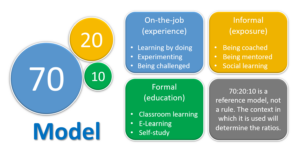
If this is the route you’re thinking is right for you, planning the development you need to take that step will help you make the most of the opportunity when it comes along. Look at the higher level job roles you aspire to and explore the required skills and knowledge. Think about what learning you need to do to get you ready using the 70:20:10 model of learning. Consider opportunities like job shadowing, volunteering to lead a new project, and secondments into other teams or roles, as well as structured learning and development. If you want to move into a leadership role, it’s the human and people skills that you can focus on developing.
For many people, promotion is a natural step, but there comes a point in some people’s careers where either the opportunities are limited, or don’t they want to move into a role that’s more about managing people than the specialism they first developed. If that’s where you’re at, you have other options.
Go broad to create more job opportunities
Broadening is all about moving sideways. This may be a move to do the same job, but in a different product area, different category or different service at your current company, or it could be about giving you greater breadth by doing the same role in another organisation.
Broadening can also be shifting your field. If you started in finance, you might want to move into an operations role, for example. Sometimes this broadening also happens by taking on responsibility for another area if you work at a senior level. Or broadening could be a complete career change!
Choosing to go broad for your next career step challenges you to develop skills that go wider. It’s about becoming great at a range of skills, enhancing your knowledge of different sectors or markets to create more opportunities to move around. New jobs might not immediately come with big pay rises if you’re going broad because you might be stepping sideways, rather than up. But they do create more variety and many more opportunities for growth.
If you want to go broad, it’s likely you need to plan development carefully. What will help you secure that next move, either within or outside your organisation? What skills and knowledge might you need to work on to facilitate that move to a new product area or sector? Think about all the skills adjacent to your current ones and identify which you might want to cultivate that will supercharge your CV for that next move.
Deepening knowledge to become a specialist
The third option for your career development plan is deepening. This is going down the specialist route – the opposite of going broad. Many organisations have woken up to the fact that not everyone wants to manage people or work at a strategic level, and recognise that experts with significant experience are still highly valuable, with the benefits of that deep knowledge being rewarded financially.
Choosing this option for your next step will mean focusing your development efforts on learning even more about topics you already understand, becoming a subject matter expert and the go-to person for that skill or knowledge. That could be about both the role you have and the sector you work in, or it could be about transitioning to mastery of a new craft. This may be within an organisation or may be moving into a consultancy role or even self-employment, providing this specialist advice and insights to businesses/organisations..
As the authority on a certain subject, you need to stay at the top of your game and invest in your continued learning to ensure you are up to date with the latest advancements in your specialist field.
Figuring out your next career step
If you are unsure about where you are heading and whether stepping up, broadening or deepening is the right path for you, it can be useful to explore your North Star using the Japanese concept of ‘Ikigai’. Ikigai translates as ‘reason for being’ or ‘purpose in life’. The ikigai Venn diagram can help you explore your career sweet spot and align your career plan to help you achieve personal fulfilment and an income. The key is to find what’s at the centre of four overlapping circles, combining:
- What you are great at (your strengths and skills)
- What you love (your passions)
- What the world needs (demand)
- What you can be paid for (income)
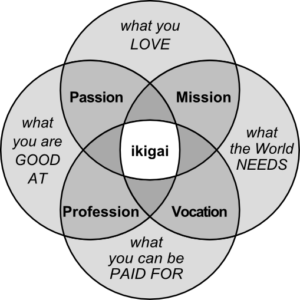
Do some self-reflection, but also seek input from others about what they see and recognise as your core strengths and skills. Think about what you really enjoy doing, when you feel most energised and motivated or when you are in a complete flow state (when time flies by because you are engrossed and enjoying what you are doing).
Then it’s research time, to explore what roles are out there in which you can use these strengths and passions and can get paid to do that! If you can’t find roles that you can be paid for, some of your passions may need to be met through hobbies and volunteering rather than paid work. You may also need to assess what the world needs and whether the options you’re considering are future-proof.
Whatever route your career takes you – and it could be a mixture of all three types of progression I’ve described here – the key is making sure you are looking ahead, anticipating what is happening, and constantly adapting your career plan to adjust to the changing and evolving landscape of work. Embracing the idea of ‘squiggly careers’ can be really helpful here.
If you want a thinking partner and a safe space to discuss whether promotion is the right option for you, or if you need to investigate different kinds of career planning, get in touch to chat about how I can help.
