
Five-minute read | Meg Burton | Career coaching
One of the most common conversations career coaches have is with people who are about to step into their first management role; they’ve either been promoted within their current organisation, or they’re joining a new company to lead a team.
It’s a significant career milestone, but it’s also one of the biggest adjustments you’ll make. We often compare it to going from being a player on a sports team to becoming the captain. You’re still part of the game, but your role has fundamentally changed. You’re no longer responsible for just your own performance; you’re now responsible for helping everyone else perform at their best.
The good news is that every great manager starts somewhere, and while there will be challenges, there are also plenty of ways to make the transition smoother.
It’s more than just a promotion
A new job title doesn’t automatically make you a manager. Management is a completely different skill set. As a manager, your success is measured by how well you enable others to succeed. That mindset shift can take time, and that’s perfectly normal.
If you’ve been promoted internally, you’ll already have credibility because your team knows you’ve been in their shoes. They understand your experience and, in many cases, they’ll already respect your abilities.
However, internal promotions can also bring their own challenges. Maybe not everyone is delighted with the decision. Some may be sceptical or worried about what you might be like in the role, maybe someone else also applied for the role and feels disappointed, and there may even be a little resentment. It’s important not to take that personally. You can’t expect everyone to celebrate your success, and it may take time for you to feel respected and supported, but you can earn their trust through consistency, fairness and good leadership.
Joining a new organisation as a manager presents a different challenge altogether. You arrive without the history or relationships, but you also arrive without any baggage or proven experience. You’re starting with a clean slate and can build your reputation from day one, but you’re going to need to earn your credibility and develop trust with your team.
You’re not part of the gang anymore
This is often the hardest part of becoming a manager, particularly if you’ve been promoted within your existing team. A key element of being a successful people manager is knowing your team as individuals, to motivate and get the best out of them whilst maintaining an appropriate level of distance – you’re not longer part of the gang.
This doesn’t mean you should become cold or distant, but you have to respect that dynamics have changed. You’ll have access to confidential information, you’ll make decisions people won’t always agree with, and sometimes you’ll need to have difficult conversations that you never imagined having with colleagues who used to sit beside you. Creating a comfortable distance between you and your team allows your team to have a safe space, making them feel comfortable and at ease in the workplace.
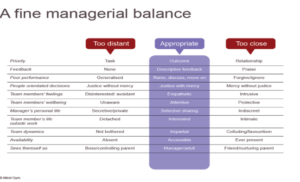
A London-based consultancy MindGym, references this fine managerial balance in this model below to try illustrating what is appropriate. It’s a bit like trying to find the “Goldilocks” formula for management. You don’t want to be so distant that your team feels they can’t approach you, but equally, you don’t want to become so close that making objective decisions becomes emotionally difficult. It’s definitely a balance that you’ll have to find that works for both you and them.
What steps can you take to make this transition successful?
Set expectations early
Talk about how you like to communicate, what success looks like and what you want the culture to be. Don’t be afraid to be vulnerable and explain this is a new challenge for you, that this is your first experience of managing people, and that you will likely get some things right and some things wrong. Let them know you’ll need their support and their honest feedback to help you navigate your new role.
Doing this early helps reduce uncertainty, minimises scepticism and gives everyone confidence in the direction you’re heading. It will encourage your team to give you feedback on what you are doing well and what might not be landing quite right.
Get to know the people behind the job titles
Take the time to learn about the people in your team. Find out more about them, their career goals, how they’d like to be managed and what type of work environment they thrive in. Ask them what they love about their work and how you can help them be their best. Find out more about them as a person, what they enjoy outside of work, and what is important to them. You don’t need to know every detail about someone’s personal life, and equally, you don’t have to share everything about your own. Professional boundaries are healthy. But understanding the people you manage helps you to build rapport and allows you to support them far more effectively.
Good management isn’t about treating everyone the same. It’s about adapting your approach to give each person what they need to succeed.
Don’t be afraid to ask for feedback
Especially if this is your first managerial role, showing that you’re human and might make mistakes will help your team build rapport. Regularly, ask your team what you are doing that works well and anything that you could be doing differently. Ask them in your 121s and team sessions for open feedback to understand how you can better support them.
Creating that two-way conversation demonstrates confidence, not weakness. It shows your team that continuous improvement applies to everyone, including you. And that you’re approachable and open to their input and suggestions. I often say to managers that sometimes employees want them to have a crystal ball to know what they are always thinking and feeling – but you’re not a mind reader. Asking questions and encouraging feedback is one way to get insightful information out into the open so you can take positive action.
Receiving feedback is also a crucial skill in any role, and if you’re unsure how to take it, you should read this blog on how to take feedback with grace.
Stay humble. Stay true to yourself
Some managers fall into the trap of thinking they need to change who they are and how they work once they’re in a more senior position. That’s not the case. The qualities that helped you earn the promotion are probably the same qualities that will help you succeed as a leader. Don’t let the title change who you are or allow authority to go to your head. Whilst you might have to set targets, delegate tasks and hold people accountable, don’t lose your humanity, continue to communicate thoughtfully and kindly.
One leadership model I often refer to with managers is the simple ‘FAB leadership positions’, because becoming a manager doesn’t mean you’ve left the team behind completely. There will be times where you are leading from the ‘front’, where you are setting the direction, rallying the troops and giving targets to hit, but there will be times when you need to lead ‘alongside’ and roll your sleeves up and get into the trenches with them. This is where you’ll help solve problems and remove barriers with your team to get the task done. Then there’s times where you’ll need to work from ‘behind’; getting out of your team’s way, delegating tasks, empowering and giving full ownership. You’ll be there to watch, listen and give feedback on their efforts and results.
When talking about this model, John Maeda also references leading from the centre – this is positioning yourself in the middle as a connector and integrator, facilitating relationships, influencing people and keeping things flowing. It’s all about adapting your leadership approach to suit the specific situation and people involved.
Remember that your reputation is built on trust
If you say you’re going to do something, do it. It sounds simple, but when you over promise and underdeliver, your team will lose trust in your abilities as a manager. When it comes to holidays, pay rises, promotions, or anything outside of your control, it’s better to manage expectations then overpromise.
Being a good manager means being open and honest when people look to you for answers you don’t have. People will forgive mistakes and react better to honesty – let’s face it, we’re all human.
Do you need coaching before becoming a manager?
The step from peer to manager can be daunting, and there’ll be moments where you’re questioning if you’re getting it right or even whether you are cut out for it. That’s completely normal. Leadership isn’t about trying to be perfect; it’s about learning, adapting, and showing up consistently for your team.
While your title may change overnight, being a good manager takes time. Focus on building trust, setting clear expectations and staying humble, and you’ll give yourself and your team the best possible chance of success.
If you do feel like you need more advice about moving into your management role, get in touch to book a free initial chat.
